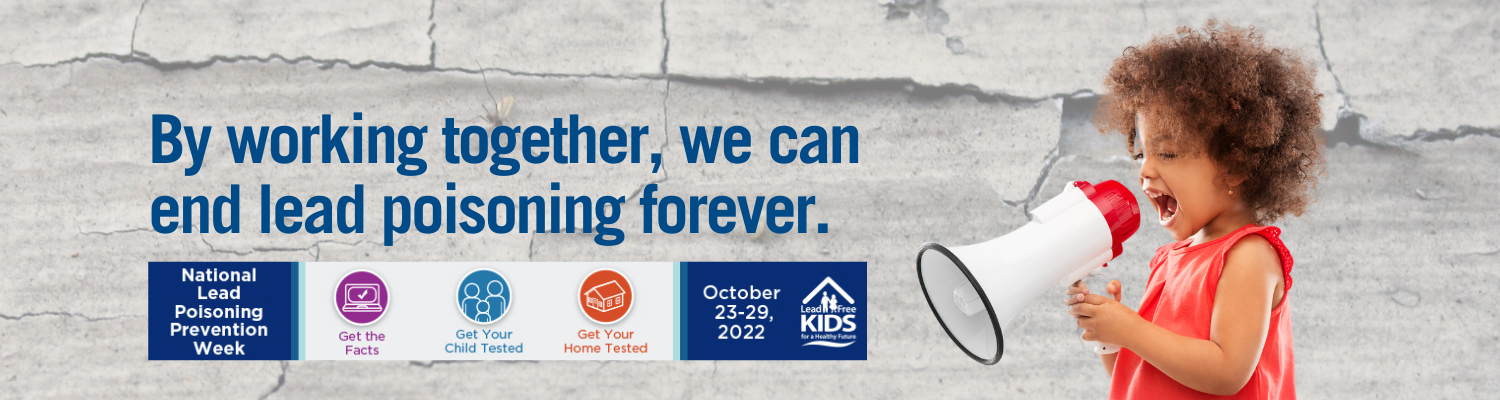
National Lead Poisoning Prevention Week: October 23-29, 2022
WELCOME TO NATIONAL LEAD POISONING PREVENTION WEEK 2022
Join us during this year’s National Lead Poisoning Prevention Week as we raise awareness about lead poisoning.
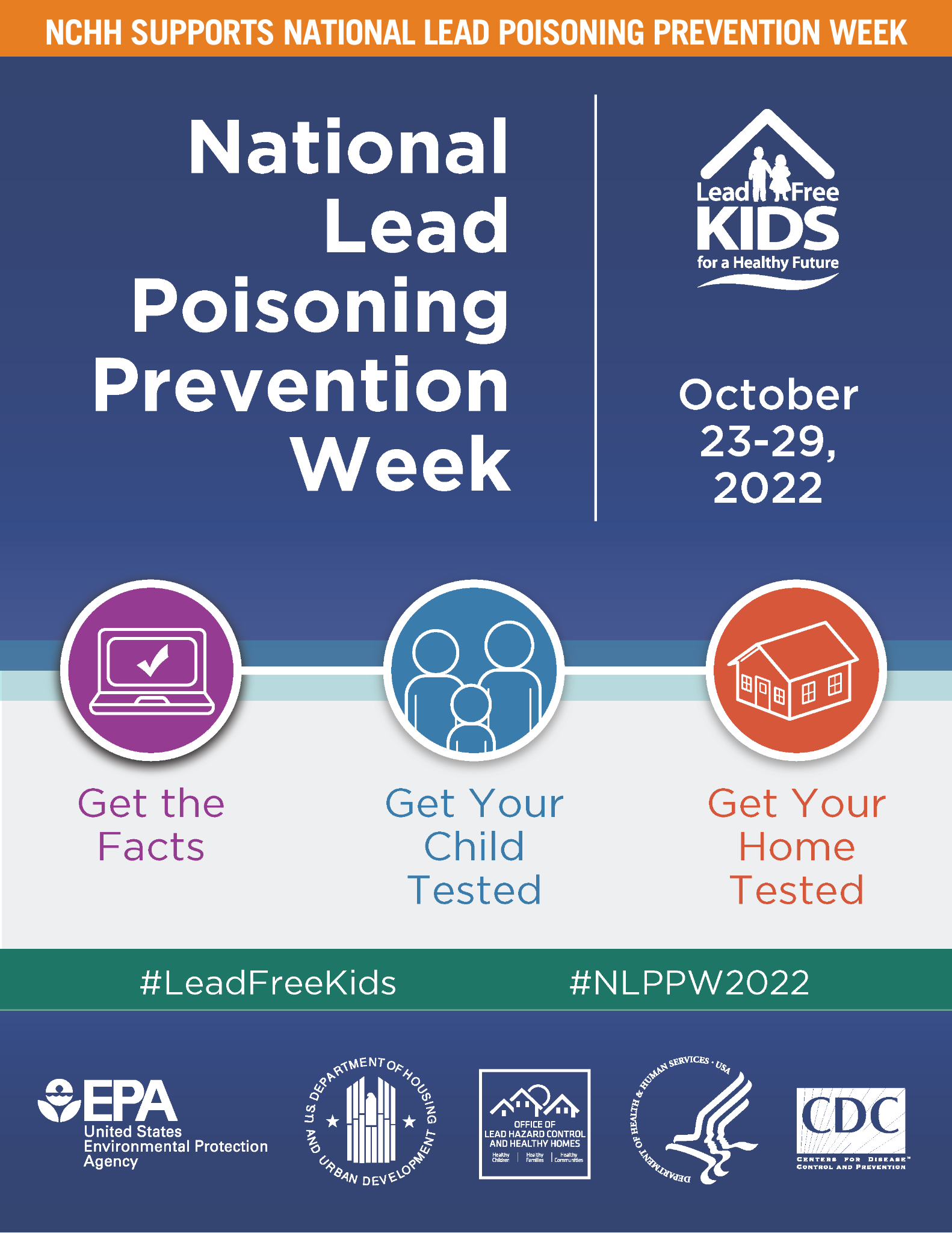
National Lead Poisoning Prevention Week (NLPPW) is October 23-29, 2022. NLPPW aims to help individuals, organizations, and state and local governments to work together to reduce childhood exposure to lead.
How will you make the greatest impact during CDC, EPA, HUD, and WHO’s week-long call to action to end childhood lead poisoning?
NLPPW Events
It’s difficult to keep track of the many informative events happening around the United States during Lead Poisoning Prevention Week. For your convenience, NCHH is working diligently to compile all as many in one place as possible and adding more each day from federal, state, and local governments, advocacy groups, and other groups. See our full event schedule here.
ILPPW Events
For international events, visit the World Health Organization’s registered events page.
Join Us October 26 for the 2022 #NLPPWchat
Mark your calendars! NCHH will host its sixth annual Twitter chat for National Lead Poisoning Prevention Week on Wednesday, October 26, 2022, from 3:00 to 4:00 p.m. ET (12:00 to 1:00 p.m. PT). NCHH’s Twitter chats are informative, thought-provoking, and even fun! All are invited to participate, but early registrants will receive the chat questions and other materials first.
Register for the Twitter chat here. (This event has ended, but you can review the Wakelet archive below.)
The #NLPPWchat aims to:
- Discuss lead poisoning prevention and response
- Raise awareness about the sources of lead exposure
- Share helpful initiatives, policies, and resources
Additional information, including chat questions and formatting information, will be available here in October (the file downloads automatically).
NEW: The Wakelet archive of the 2022 #NLPPWchat is now available. With the Wakelet tool, we’re able to present the full chat in a more organized way that still allows users to like, retweet, and reply to the original posts. View the Wakelet archive of the 2022 #NLPPWchat.
If you missed any of our previous chats and would like to be notified about future social media events, contact Christopher Bloom.
Official NLPPW2022 Campaign Materials
NOW AVAILABLE: Use the following official agency materials to promote National Lead Poisoning Prevention Week 2022 in your community:
- Partner Information Kit – This document, available in English and Spanish, helps partners prepare and promote activities or events at the local level. It’s intended to provide consistent messaging and ideas for implementing local events and lists available resources. [pdf]
- Sample Social Media Package – Actively spread the word about National Lead Poisoning Prevention Week in English or Spanish by sharing messaging on social media using the hashtags #LeadFreeKids and #NLPPW2022. [pdf]
- Flyers – Create instant impact with these large, bold images, available as PDF files! A PPTX version also exists which may be customized for translation into other languages or to include an organization’s logo and event information.
- Images – Use these official NLPPW images in your outreach. A modifiable version is available for those who wish to share versions in other languages.
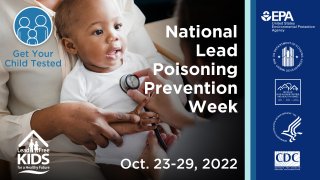
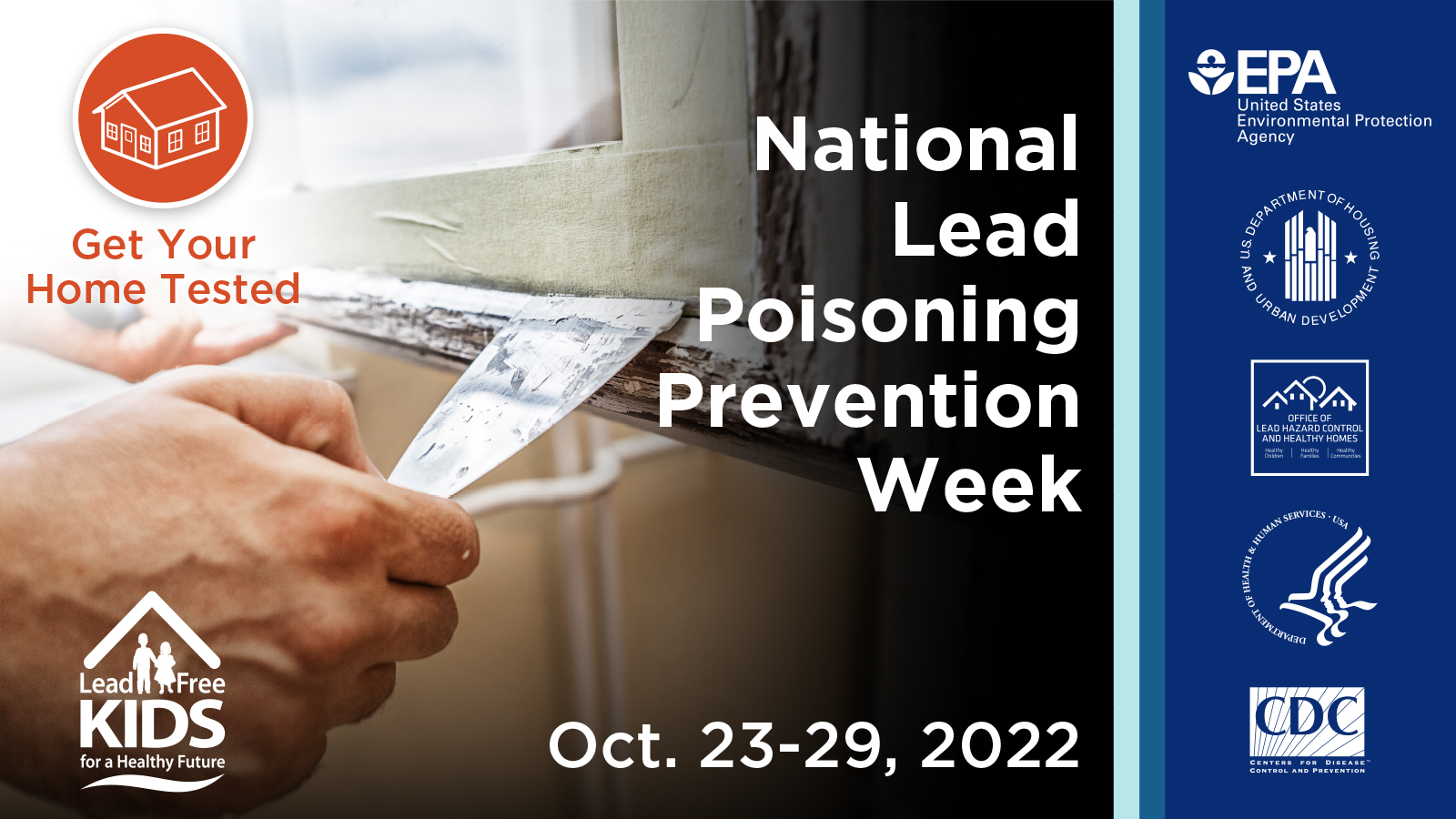
- Modifiable version [pptx]
- Icons – Add these official NLPPW icons to your outreach materials.
- Web Banners – These banners are available as 160 x 600 vertical, 728 x 102 horizontal, and 403 x 403 square orientations. Add them to your website.
- Event Banners – These banners are designed to be used at your NLPPW events. When printed, they should measure six feet by two feet.


Federal Agency Activities
The U.S. Department of Health and Human Services, the Centers for Disease Control and Prevention, the U.S. Department of Housing and Urban Development, and the U.S. Environmental Protection Agency collaborate with their partners every year on a national outreach effort to observe National Lead Poisoning Prevention Week (NLPPW). The three key themes follow below:
- Get the Facts: Learn about the hazards of lead;
- Get Your Home Tested: Learn how to minimize risks of lead exposure by hiring a certified professional to test older homes for lead; and
- Get Your Child Tested: A simple blood test can detect lead.
HUD, EPA, and CDC will post messages on social media corresponding to each of the daily themes shown below. If you’re on Twitter, share messages sent from these social media accounts: @HUDgov, @HUDHealthyHomes, @EPA, and @CDCgov.
- September 2022: How Can We Reduce Lead Exposure Together?
- Monday, October 24, 2022: Why Should I Be Concerned About Lead?
- Tuesday, October 25, 2022: How Do I Know if There Is Lead in My Home?
- Wednesday, October 26, 2022: How Do I Know if There Is Lead in My Drinking Water?
- Thursday, October 27, 2022: How Do I Know if My Child Has Been Exposed to Lead?
- Friday, October 28, 2022: How Can I Make Sure My Child Has Safe Crawls?
Additional Federally Sponsored Resources
Happy, Healthy, Lead-Free Me!
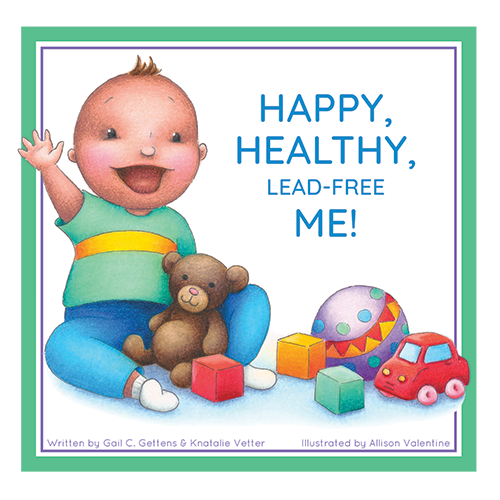 New Hampshire’s Childhood Lead Poisoning Prevention Program recently published this board book, which is entertaining and educational for both children and their parents. PDF versions of the book are available in English, Spanish, Portuguese, Nepali, Dari, Swahili, Chuukese, and Somali. The official page also includes a read-aloud video.
-
- Bulk orders: Happy, Healthy, Lead-Free Me! is available to order in cases of 40 books directly from the book’s official webpage. For questions related to purchasing, quotes, invoicing, or required vendor approval processes, email info@cribsforkids.org.
National Lead Information Center (NLIC)
Maintained by the EPA with funding from HUD, the National Lead Information Center is an valuable tool for contractors, housing health professionals, and the general public. NLIC agents can answer questions on a variety of topics related to of lead-based paint topics. Call NLIC’s toll-free number: 1-800-424-LEAD (5323).
International Lead Poisoning Prevention Week of Action
The International Lead Poisoning Prevention Week of Action runs concurrently with awareness events in the United States. See the world and check out resources related to this event. This year’s theme has not yet been announced.
Planning an Event?
Share information about your event with others worldwide by registering your activity on the World Health Organization (WHO) website.
NCHH Webinar: Making an Impact!
NCHH and the National Safe and Healthy Housing Coalition have created a webinar entitled Lead Poisoning Prevention Week: Making an Impact! Watch the webinar to learn:
- Clear actions and tools to plan a successful event
- How to engage traditional media effectively
- Simple steps to use social media to create buzz
- How to engage and invite elected officials
- Tools to easily include families impacted by lead and elevate their stories to increase understanding, awareness, and political will
Webinar resources:
- Planning Events
Webinar | PowerPoint: slides and notes - Effectively Engage Traditional Media
Webinar | PowerPoint: slides and notes - Building a Case for Elected Officials
Webinar | PowerPoint: slides and notes - Sharing Your Stories
Webinar | PowerPoint: slides and notes - Social Media
Webinar | PowerPoint: slides and notes
NCHH’s NLPPW Blog Archive
In 2021, NCHH published a series of blogs related to lead poisoning. Whether you’re a parent, a contractor, or a policymaker, we have something for you here.
- Healthy Household 101: The Dangers of Lead-Based Paint (Christopher Bloom, NCHH)
- When Home Improvement Leaders Are Busted for Lead Violations, Does Anyone Learn Anything? (Christopher Bloom, NCHH)
- Healthy Household 101: Why Consumers Should Understand the Basics of the RRP Rule (Christopher Bloom, NCHH)
- How Municipalities Can Leverage RRP Requirements to Advance Lead Poisoning Prevention (Amanda Reddy, NCHH)
- Why Contractors Should Embrace and Market the RRP Rule (Christopher Bloom, NCHH)
For National Lead Poisoning Prevention Week 2019, NCHH published a blog on the topic of reviewing and overhauling existing codes and policies to improve enforcement of lead poisoning prevention measures.
- NLPPW 2019 Blog: Tactical Thinking: Housing Codes and Lead Poisoning Prevention (Sarah Goodwin and David Jacobs, NCHH)
For National Lead Poisoning Prevention Week 2018, NCHH published a suite of guest blogs written by four of our 2017 Lead Poisoning Awareness Community Mini-Grant award recipients. These blogs are a great way to learn about what kinds of activities are possible for an organization with a smaller grant (in this case, $5,000) as well as pointers on how to create your own successful event.
- NLPPW 2018 Blog 1: NCHH’s Lead Awareness Community Grant Prompts a Year of Action in Grand Rapids, Michigan (Paul Haan, Healthy Homes Coalition of West Michigan)
- NLPPW 2018 Blog 2: Implementing a Successful Grant Award (Joyce Theard, St. Louis County Department of Public Health)
- NLPPW 2018 Blog 3: Will the Children Lead Us Out of Lead? (Marie Hunt, Southern United Neighborhoods)
- NLPPW 2018 Blog 4: NCHH Mini-Grant Helps to Fund a Lead Summit and Coalition in Philadelphia (Colleen McCauley, Public Citizens for Children and Youth)
As a special bonus, we also published a consumer guest blog in 2018, “When ‘Special’ Equals ‘Sick,'” which illustrates why National Lead Poisoning Prevention Week is so important. Find it here.
10 Policies to Prevent and Respond to Childhood Lead Exposure
The Health Impact Project, a collaboration of the Robert Wood Johnson Foundation and The Pew Charitable Trusts, released a seminal report in 2017, 10 Policies to Prevent and Respond to Childhood Lead Exposure. The Health Impact Project is a national initiative designed to promote the use of health impact assessments (HIAs) as a decision-making tool for policymakers.
The 10 Policies report is an excellent resource to use during National Lead Poisoning Prevention Week. Learn more about it here.
Resources
- CDC Lead Poisoning Prevention Week 2022 web page [url]
- EPA Lead Poisoning Prevention Week 2022 web page [url]
- HUD Lead Poisoning Prevention Week 2022 web page [url]
- Search Twitter for #LeadFreeKids [url; Twitter]
- Search Twitter for #NLPPW2022 [url; Twitter]
- Search Twitter for #NLPPW2021 [url; Twitter]
- Search Twitter for #NLPPW2020 [url; Twitter]
- Search Twitter for #NLPPW2019 [url; Twitter]
- Search Twitter for #NLPPW2018 [url; Twitter]
- Search Twitter for #NLPPWchat [url; Twitter]
- Scroll through the 2019 #NLLPWchat tweets on Wakelet.
- Scroll through the 2018 #NLLPWchat tweets on Wakelet.
Additional Related Resources
While the following materials aren’t specific to National Lead Poisoning Prevention Week, they are popular materials that we’ve shared with many who were interested to learn how lead exposure affects them and their loved ones.
- The Lead-Safe Toolkit for Home-Based Child Care [url; NCHH, 2019]
- 10 Policies to Prevent and Respond to Childhood Lead Exposure [url; NCHH, 2017]
- A Shower of Benefits: Drinking Water and Healthy Housing [blog] [url; NCHH, 2017]
- Threats or Promises: Which Way for the Trump Administration on Childhood Lead Poisoning Prevention? [blog] [url; NCHH, 2017]
- Lead Poisoning: Focusing on the Fix [pdf; Journal of Public Health Management and Practice, 2016]
- Issue Brief: Childhood Lead Exposure and Educational Outcomes [pdf; NCHH, 2012]
- At a Glance: Childhood Lead Exposure and Educational Outcomes [pdf; NCHH, 2012]
- Childhood Lead Poisoning: What You Should Know about Your Child’s Blood Lead Test Results [pdf; NCHH, 2008]
- Envenenamiento con plomo en la infancia: Lo que used debe saber sobre los resultados de la prueda de plomo de su niño [pdf; NCHH, 2015]
- Fact Sheet: Toys and Childhood Lead Exposure [pdf; NCHH, 2007]
- Fact Sheet: Testing for Lead in Consumer Items for Children [pdf; NCHH, 2007]
x
Latest page update: September 26, 2022.